
50th VI-HPS Tuning Workshop (GWDG, Göttingen, Germany)
Date
Monday 31 August - Friday 04 September 2026
Location
The workshop will be an ON-SITE event.
The workshop will be hosted by GWDG.
Gesellschaft für wissenschaftliche Datenverarbeitung mbH Göttingen
Burckhardtweg 4
37077 Göttingen
Germany
Organising Institutions

Goals
This workshop organised by VI-HPS and GWDG, will:
- give an overview of the VI-HPS programming tools suite
- explain the functionality of individual tools, and how to use them effectively
- offer hands-on experience and expert assistance using the tools
On completion participants should be familiar with common performance analysis and diagnosis techniques and how they can be employed in practice (on a range of HPC systems). Those who prepared their own application test cases will have been coached in the tuning of their measurement and analysis, and provided optimization suggestions.
Programme Overview
Presentations and hands-on sessions are planned on the following topics:
- CUBE profile processing and exploration
- Extra-P automated performance modeling
- Likwid performance tool suite
- Linaro MAP profiling and performance reports
- lo2s lightweight performance monitoring tool for Linux
- MAQAO performance analysis & optimisation
- MERIC energy consumption and efficiency assessment
- Scalasca automated trace analysis
- Score-P instrumentation and measurement
- TAU performance system
- Vampir interactive trace analysis
A brief overview of the capabilities of these and associated tools is provided in the VI-HPS Tools Guide.
The workshop will be held in English and run from 09:00 to not later than 18:00 each day, with breaks for lunch (self-paid) and refreshments.
Classroom capacity is limited, therefore priority may be given to applicants with parallel codes already running on the workshop computer system (Emmy and Grete), and those bringing codes from similar x86_64 Linux cluster systems to work on. On-site participants are encouraged to prepare their own MPI, OpenMP and hybrid MPI+OpenMP parallel application codes for analysis. Codes using multiple GPUs via OpenACC or CUDA may also be analysed.
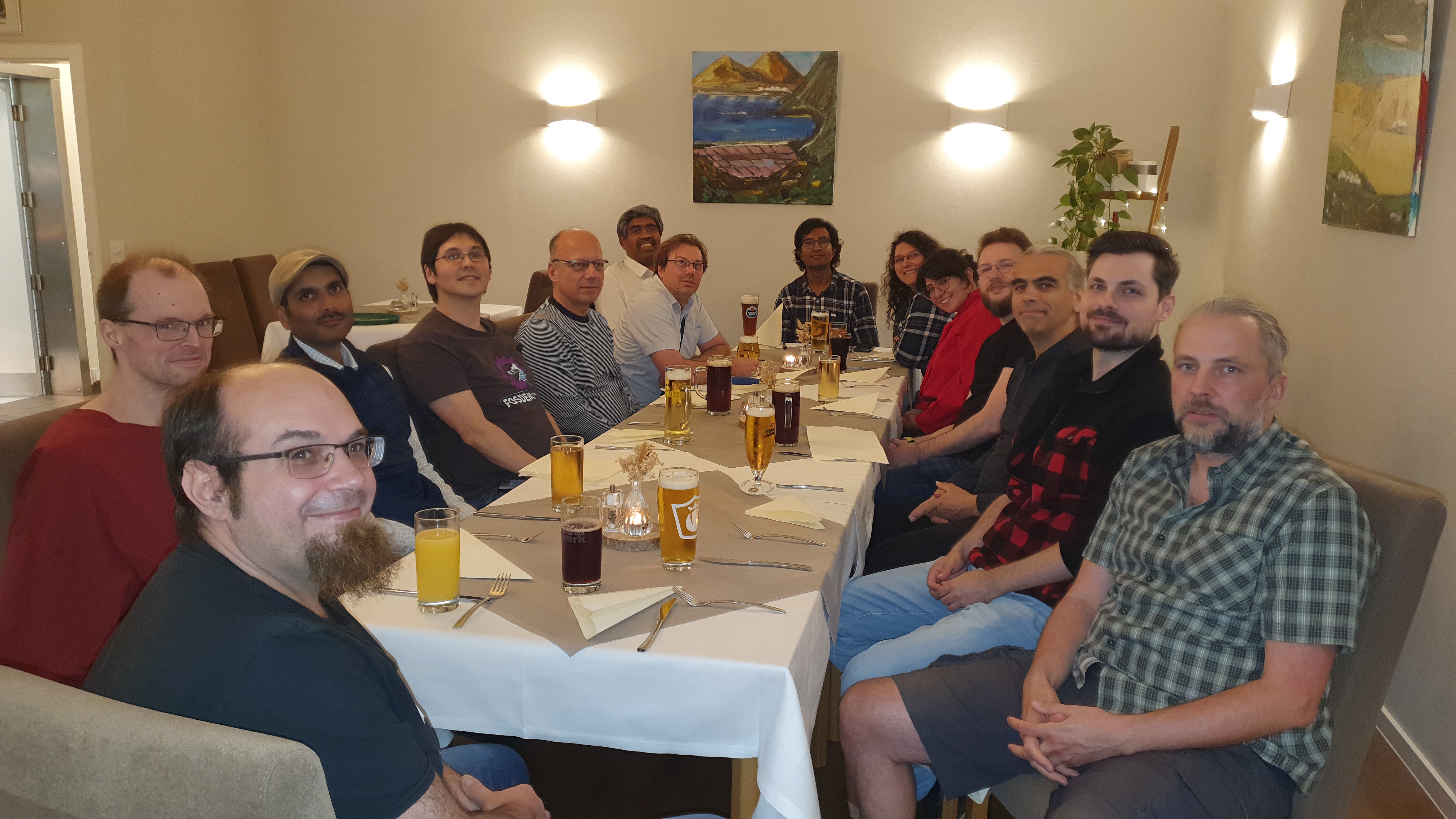
Programme in Detail (provisional) - all times given as CEST (UTC+2)
| Day 1: | Monday 31 August | |
| 09:00 | Welcome [Christian Boehme, GWDG] |
|
| 10:30 | (break) | |
| 11:00 | lo2s [Christian von Elm, TUD] |
|
| 12:30 | (lunch) | |
| 13:30 |
LIKWID performance tool suite [Thomas Gruber, FAU]
|
|
| 15:00 | (break) | |
| 15:30 | Hands-ons using Io2s & LIKWID on the participants' codes | |
| 17:00 | (adjourn) | |
| Day 2: | Tuesday 01 September | |
| 09:00 | MAQAO performance analysis framework [Cédric Valensi & Emmanuel Oseret, UVSQ]
|
|
| 10:30 | (break) | |
| 11:00 | ||
| 12:30 | (lunch) | |
| 13:30 | Hands-on coaching to apply TAU and MAQAO to analyze participants' own code(s). | |
| 17:00 | (adjourn) | |
| Day 3: | Wednesday 02 September | |
| 09:00 | Score-P instrumentation & measurement toolset [Marc Schlütter, JSC]
|
|
| 10:30 | (break) | |
| 11:00 | Score-P specialized instrumentation and measurement [Bert Wesarg, GWT/TUD] |
|
| 12:00 | (lunch) | |
| 13:00 |
Identifying scalability bugs with Extra-P [Gustavo de Morais, TUDarmstadt] Hands-on coaching to apply Score-P and Extra-P to analyze participants' own code(s). |
|
| 17:00 | (adjourn) | |
| Day 4: | Thursday 03 September | |
| 09:00 | Scalasca automated trace analysis [Marc Schlütter, JSC] | |
| 10:30 | (break) | |
| 11:00 | Vampir interactive trace analysis [Bert Wesarg, GWT/TUD] |
|
| 12:00 | (lunch) | |
| 13:00 | Hands-on coaching to apply Vampir and Scalasca to analyze participants' own code(s). | |
| 17:00 | (adjourn) | |
| Day 5: | Friday 04 September | |
| 09:00 | Linaro Forge profiling and performance reports [Rudy Shand, Linaro]
|
|
| 10:30 | (break) | |
| 11:00 |
MERIC/RADAR energy assessment [Tomáš Panoc, IT4I] Review of the workshop |
|
| 12:30 | (lunch) | |
| 13:30 | Hands-on coaching to apply MERIC and Linaro Forge to analyze participants' own code(s). | |
| 15:00 | (break) | |
| 15:30 | Hands-on coaching to apply tools to analyze participants' own code(s). | |
| 17:00 | (adjourn) | |
Hardware and Software Platforms
- Emmy: 220 general-purpose compute nodes: 2 x Intel Xeon Sapphire Rapids 8468, 48c, 514 GB memory
- Grete: 35 accelerated compute nodes: 2 x AMD Zen3 EPYC 7513, 64c, 512 GB DDR5 memory, 4 x NVIDIA A100 (40GB VRAM) GPUs
The local GWDG HPC system is the primary platform for the workshop and will be used for the hands-on exercises. Course accounts will be provided during the workshop to participants without existing accounts. Other systems where up-to-date versions of the tools are installed can also be used when preferred, though support may be limited and participants are expected to already possess user accounts on non-local systems. Regardless of whichever systems they intend to use, participants should be familiar with the relevant procedures for compiling and running their parallel applications (via batch queues where appropriate).
Registration
Registration until 20/08/2026 via the course website.
After that date, registrations may still be accepted by e-mail to hpc-support[at]gwdg[dot]de, but please note that program code analysis might not be feasible for last-minute entries.
Accomodation
We recommend the following hotels:
- Hotel Beckmann (4 min by bus)
- Eden Hotel
Contact
Local ArrangementsGWDG Email: anja[dot]gerbes[at]gwdg[dot]de |
Tuning Workshop SeriesUniversité de Versailles Paris Saclay Email: cedric[dot]valensi[at]uvsq[dot]fr |
